
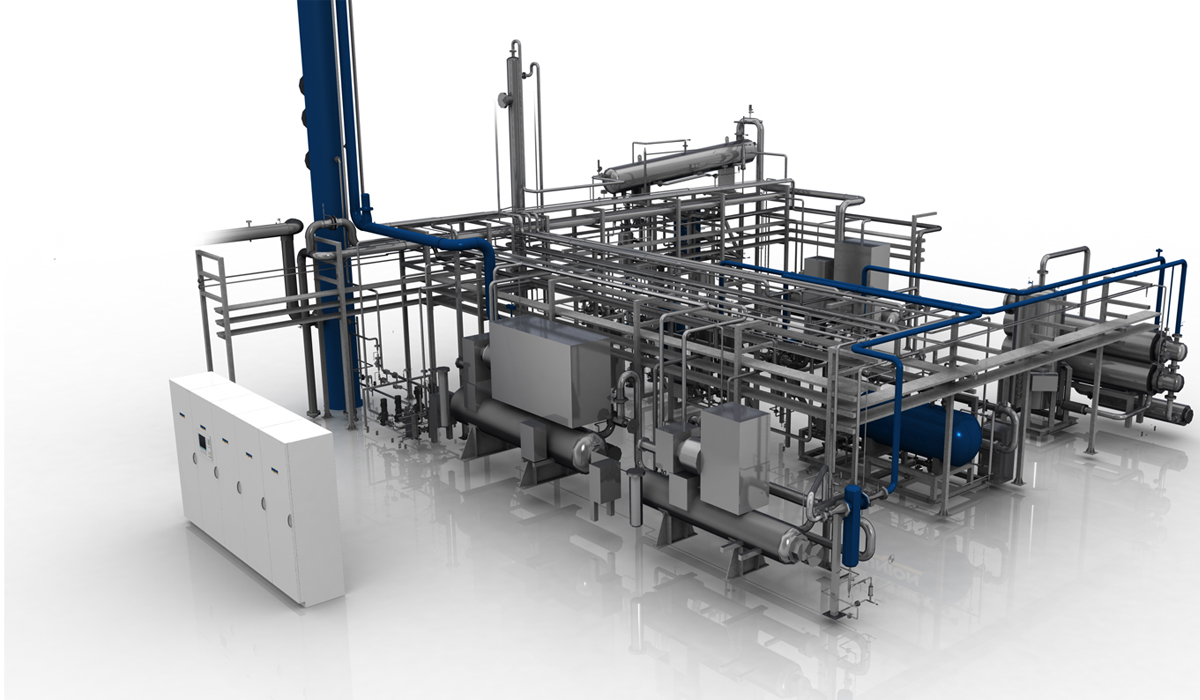
CO2 RECOVERY FROM A WIDE RANGE OF CO2 SOURCES
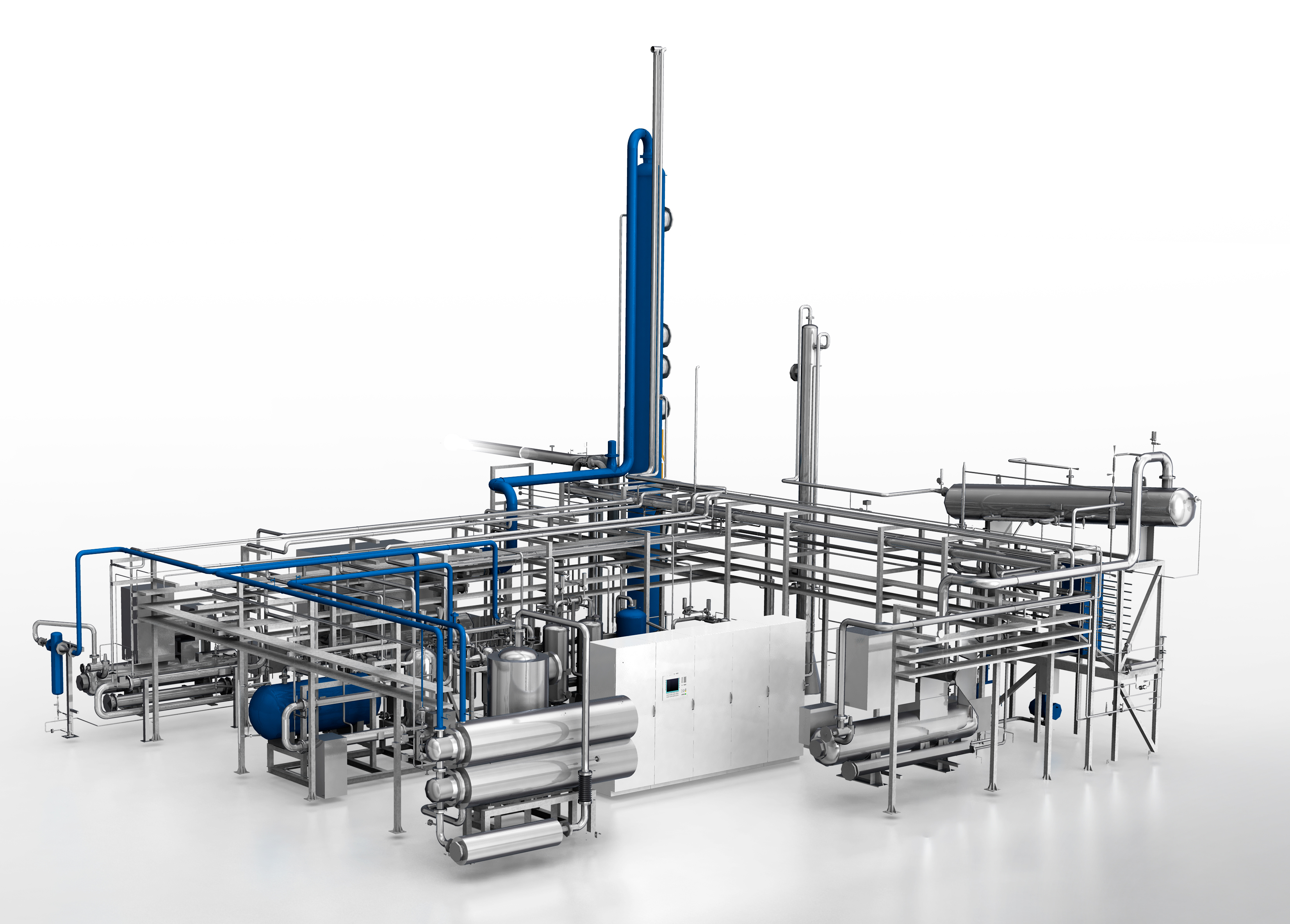
Pentair’s CO2 Recovery plants (RBU) are designed for a broad range of industrial production sites generating CO2-rich rawgas streams. These streams typically contain 85 – 99 % CO2 and can originate from fermentation, ethanol, ammonia, or ethylene production, and other high-purity industrial processes. The RBU system combines compression, purification, and liquefaction to produce high-quality liquid CO2.
Each RBU is built around a precise understanding of the customer’s feed gas composition, impurity profile, required CO2 quality, operating conditions, and business objectives. By combining standardized process blocks with application-specific engineering, Pentair can tailor each solution to deliver the required CO2 specification and quantity while optimizing CAPEX, OPEX, reliability, and overall lifecycle performance.
With a broad portfolio of proven, proprietary, and patented purification technologies, Pentair can address a wide range of impurities, including hydrocarbons, NOx, sulfur components, alcohols, oxygenates, and aromatic compounds.
Benefits
- High-quality liquid CO2 production
- Tailored purification for every feed gas profile
- Competitive lifecycle economics
- Reliable compliance with demanding CO2 specifications
- Sustainable long-term operation
-
Sustainability and Operational Competitiveness
-
Beyond producing liquid CO2 from CO2-rich feed gas streams, the RBU concept can support customers in improving the sustainability and competitiveness of their operations. For bioethanol producers, recovering fermentation CO2 can help reduce the carbon footprint of ethanol and organic compound emissions while creating an additional revenue stream.
At the same time, technologies such as CO2 Scrub, CO2 refrigeration, and application-specific process flow design can help reduce site utilities, including water consumption, while supporting reliable product quality and efficient plant operation.
-
Safety-Driven Engineering and Compliance
-
Every RBU plant undergoes a thorough safety assessment in line with EN standards for HAZOP/LOPA and Functional Safety (SIL). This supports safe and efficient operation and helps ensure a smooth CE marking process.
-
Lifecycle Services and Support
-
To support reliable operation long after commissioning, Pentair offers tailored Service Level Agreements that combine preventive maintenance, remote diagnostics, performance monitoring, and dedicated technical support. These services help ensure that theplant continues to deliver the required CO2 quality, operational reliability, and uptime throughout its lifecycle.
Proven Purification Technologies for Demanding CO2 Specifications
-
CO2Scrub Technology
-
For demanding bioethanol fermentation applications, the CO2Scrub is particularly well suited to removing high-boiling impurities, including aromatic components, alcohols,oxygenates, and selected sulfur compounds, and maintaining product quality even when feed gas composition and impuritylevels vary.
Unlike conventional water-based purification approaches used in many fermentation applications, CO2Scrub supports a completely water-free purification process, helping reduce water consumption and environmental impact. In addition, the process requires no chemical additives and produces no liquid or solid waste, supporting more sustainable and resource-efficient CO2 purification.
-
NOx Removal Technology
-
Certain CO2-rich feed gas streams may contain nitric oxide (NO) and other nitrogen oxides that must be removed to meet food-grade or industrial CO2 specifications. Pentair offers dedicated NOx removal technologies as part of the RBU purification portfolio, selected according to the feed gas composition andrequired product quality. By integrating NOx removal into theoverall purification process,
Pentair helps customers achieve stringent CO2 purity requirements while maintaining reliable plantoperation and minimizing the impact on operating costs.
-
Catalytic Oxidation
-
For CO2-rich feed gas streams containing residual hydrocarbons or volatile organic compounds (VOCs), Pentair’s Catalytic Oxidation technology (CATOX) converts these components into CO2 and water through a controlled catalytic reaction. The process provides an efficient method of removing impurities that cannot otherwise be removed from the CO2 feed.
By reducing hydrocarbon concentrations before downstream purification and liquefaction, CATOX supports compliance with demanding CO2 product specifications while helping maximize CO2 recovery and operational reliability. This technology is particularly valuable for industrial CO2 recovery applications where hydrocarbon contamination may vary over time.
-
Adsorptive Purification
-
Pentair’s adsorptive purification technologies are used to remove trace contaminants that may affect CO2 quality, equipment reliability, or downstream processing. Using activated carbon, molecular sieves, and specialty adsorbents, Pentair can target impurities such as sulfur compounds, alcohols, oxygenates, aromatics, VOCs, and residual moisture.
The technology can be tailored to the specific impurity profile of each application, helping customers achieve demanding CO2 specifications while supporting reliable and efficient plant operation.
RELATED CASE STUDIES
As part of their ethanol production process, TSM Group sought a way to capture and repurpose the CO2 emissions generated from molasses fermentation—a byproduct of sugar manufacturing. Their goal was to reduce greenhouse gas emissions and create a sustainable CO2 source for industrial use.
DOWNLOADS
| TITLE | DOWNLOAD PDF | |
| Sales Sheet | CO2 Recovery Plant for CO2-rich gas streams | Download |
| Technical documentation | Looking for operating instructions, installation manual, spare part list etc.? | Please, send us your request |